
90
participants
4
days
6
committees and councils
5 DECEMBER
Welcome to TMUN!
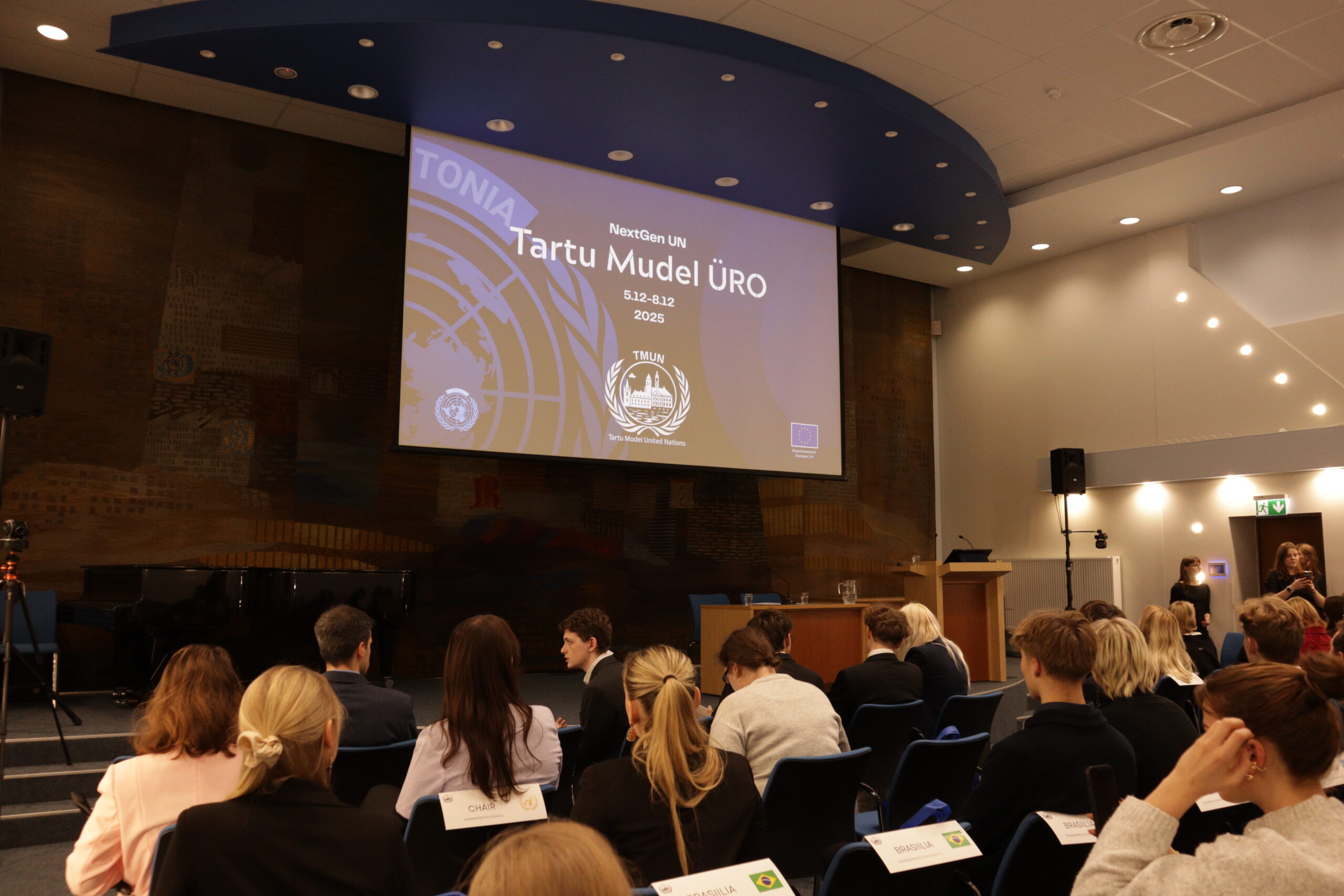
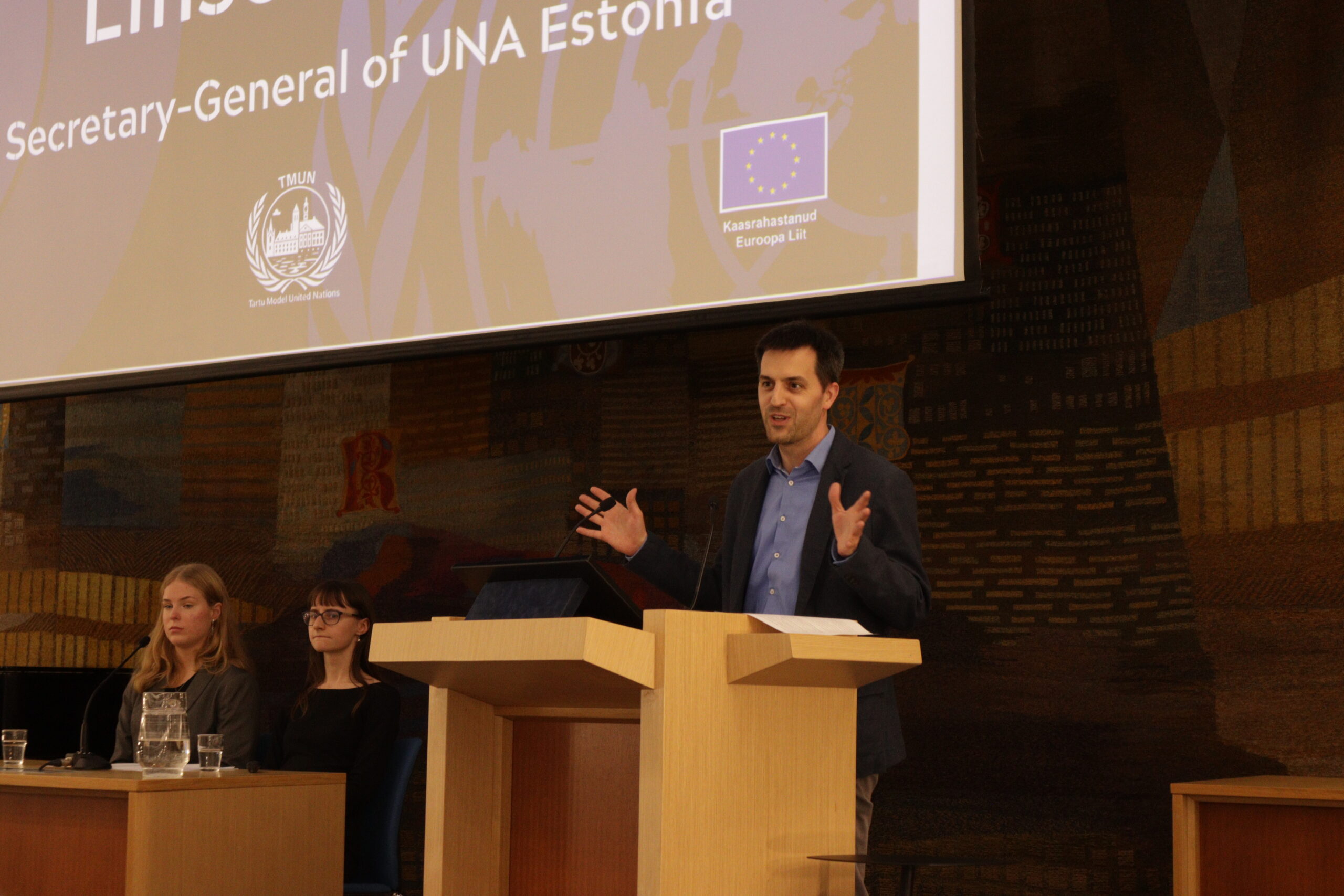
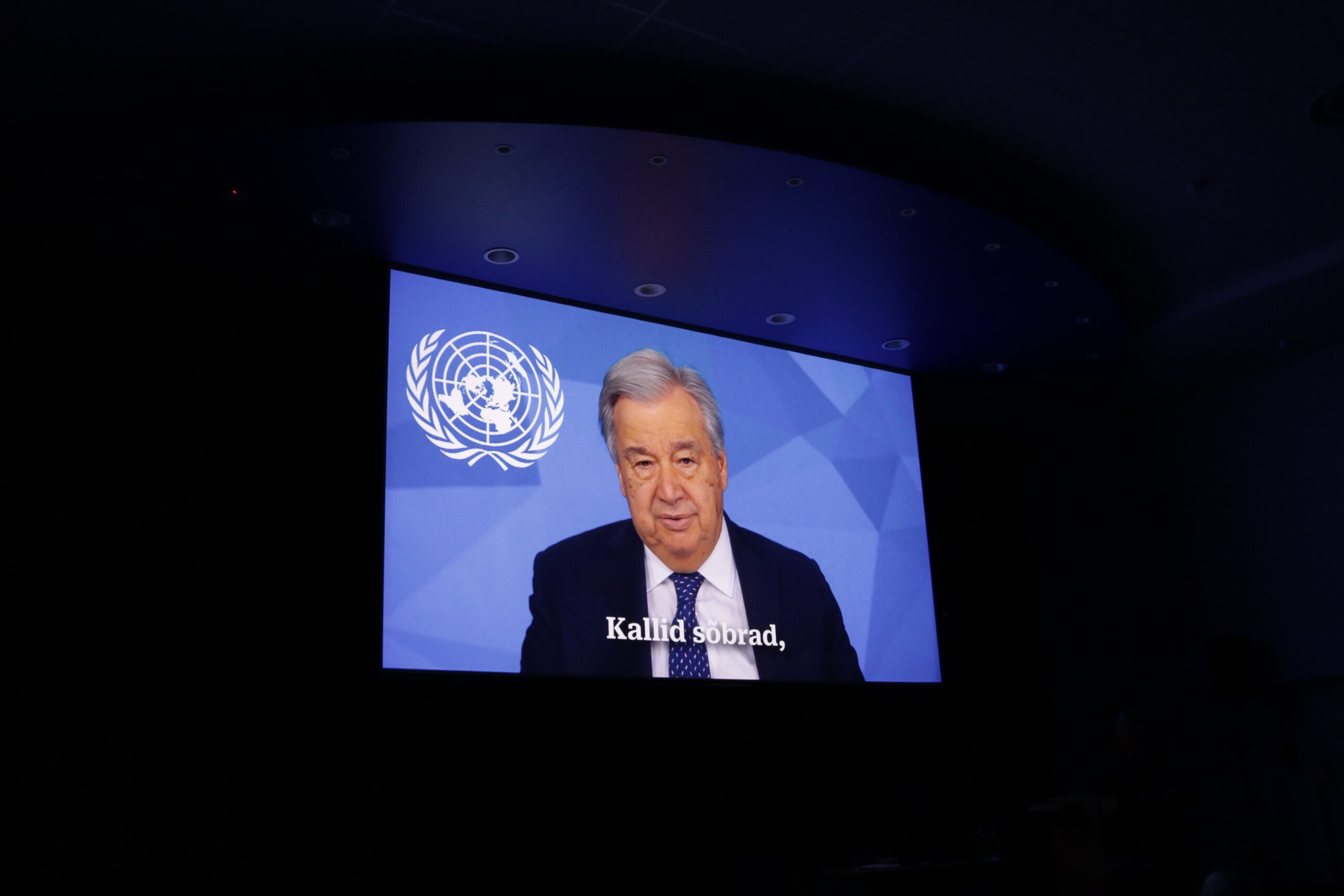
Participants registered at the University of Tartu Library’s conference centre, where the simulation was officially opened. Delegates were welcomed by the Secretary-General of the United Nations Association of Estonia, as well as Rein Tammsaar and António Guterres via video.
At the Johan Skytte Institute of Political Studies, delegates got to know one another and heard international experts introduce the committee topics.
The opening ceremony and international experts
The Secretary-General of the United Nations Association of Estonia spoke at the opening ceremony. Estonia’s Permanent Representative to the United Nations, Rein Tammsaar, and UN Secretary-General António Guterres welcomed participants via video.
Following the opening ceremony, the programme moved to the Johan Skytte Institute of Political Studies. Delegates had an opportunity to get to know one another before the following day’s negotiations.
The following experts joined the simulation via video:
- Jide Olugbade – a doctoral student at the Georgia Institute of Technology.
- Martina Volpe Donlon – head of the climate and sustainable development teams at the UN Department of Global Communications.
- Renata Preturlan – a Social Affairs Officer at the UN Department of Economic and Social Affairs (UN DESA).
- Kalekye Kyalo – a Human Rights Officer at the Office of the UN High Commissioner for Human Rights (OHCHR).
The experts introduced the committee topics and shared their professional experience and first-hand perspectives on the UN. The first day helped participants begin thinking as diplomats representing their assigned countries.
6 DECEMBER
Negotiations begin
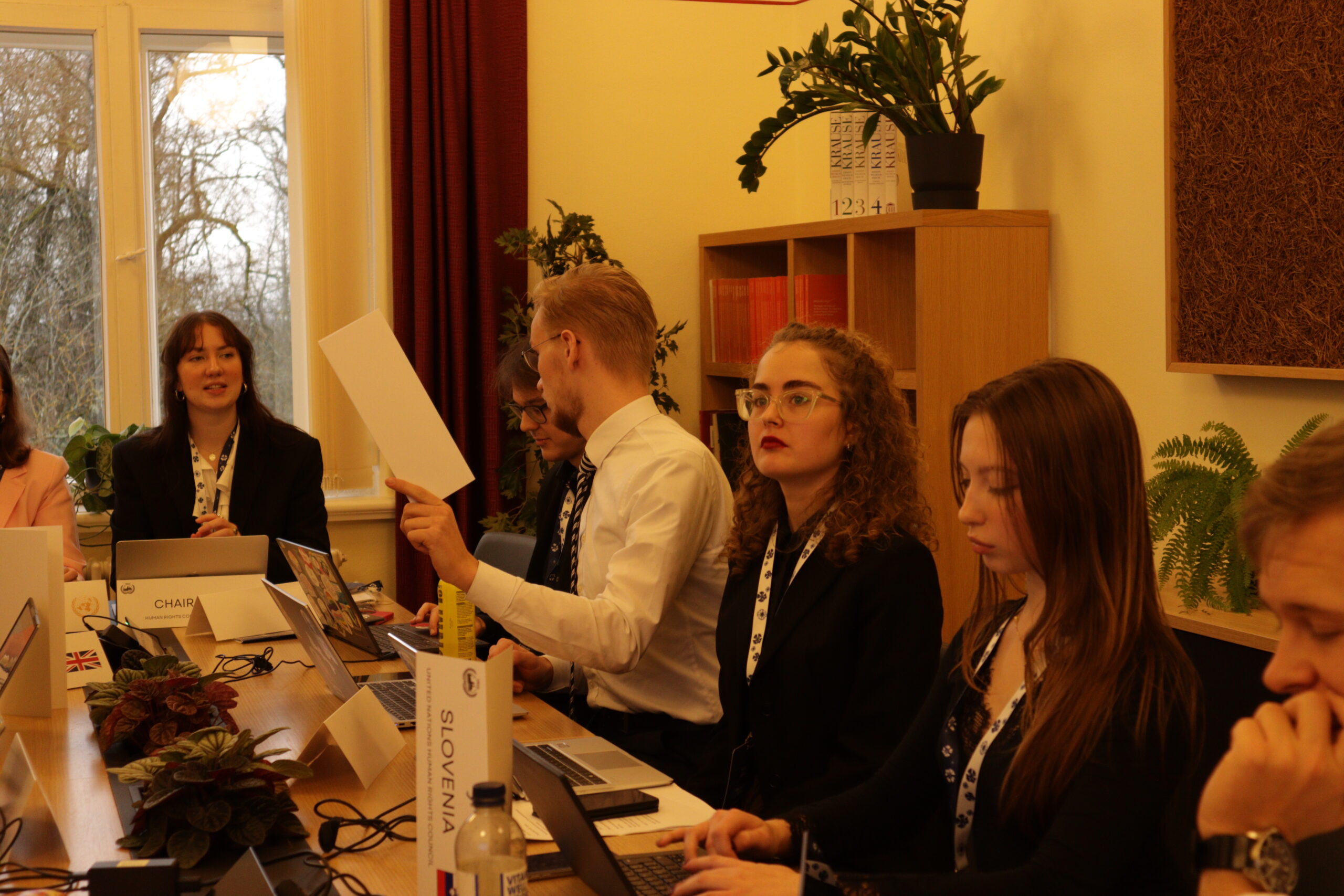
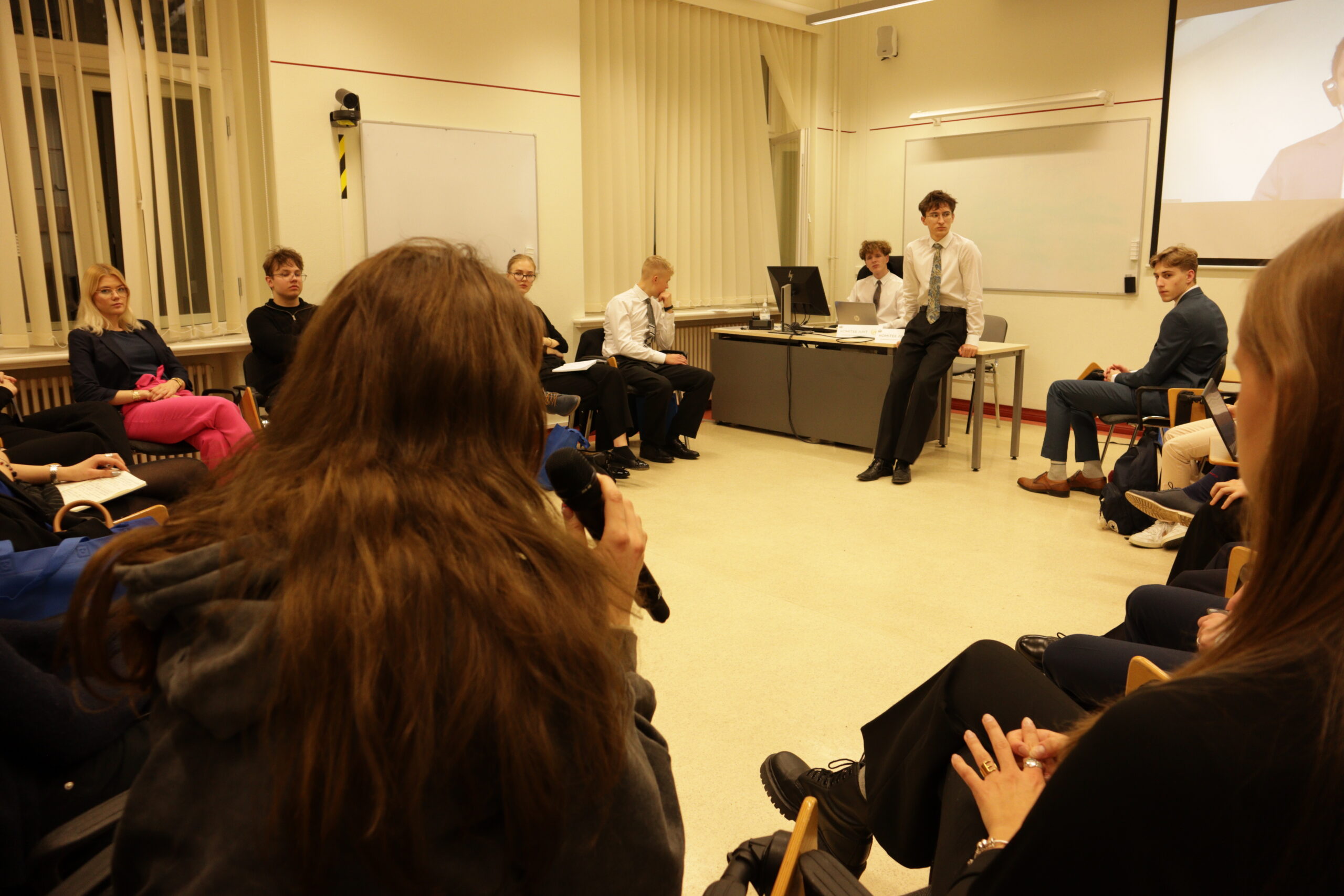
Across six committees and councils, delegates delivered speeches, defended their countries’ positions and sought allies. The first working groups and ideas began to take shape as resolutions.
The day ended with an international students’ evening, where delegates got to know each other in a more relaxed setting.
Explore the 2025 committees
General Assembly First Committee (DISEC)
Regulating the development, use and proliferation of AI-based military technology.
Working language: Estonian · high schoolGeneral Assembly Second Committee (ECOFIN)
Transitioning from oil-based energy to renewable energy in less developed countries.
Working language: Estonian · universityGeneral Assembly Third Committee (SOCHUM)
Protecting children’s rights in the digital age.
Working language: Estonian · high schoolSecurity Council (UNSC)
The question of Israel and Palestine.
Working language: Estonian · universityEconomic and Social Council (ECOSOC)
Protecting the rights of women and girls in conflict and post-conflict areas.
Working language: Estonian · universityHuman Rights Council (HRC)
The rights of intersex people.
Working language: English · university
7 DECEMBER
Experts join the committees
Estonian experts brought experience in diplomacy, defence, human rights and international cooperation to the committees. Delegates immediately put their new knowledge to use in negotiations and resolution drafting.
The day also included a tour of the University of Tartu and an evening social programme.
Who met with the delegates?
- DISEC – Major Janar Pekarev (Deputy Commander for Innovation at the Estonian Defence Forces’ Future Capabilities and Innovation Command).
- ECOFIN – Gert Siniloo (Director-General for Climate Diplomacy and Connectivity at the Ministry of Foreign Affairs).
- SOCHUM – Andres Aru (Head of the Children’s and Youth Rights Department at the Office of the Chancellor of Justice).
- Security Council – Minna-Liina Lind (Undersecretary for Global Affairs at the Ministry of Foreign Affairs).
- ECOSOC – Tiina Intelmann (Special Representative for Multilateralism and Mediation at the Ministry of Foreign Affairs and former Vice-President of ECOSOC).
- Human Rights Council – Signe Riisalo (Member of the Riigikogu and former Minister of Social Protection).
8 DECEMBER
The General Assembly comes together
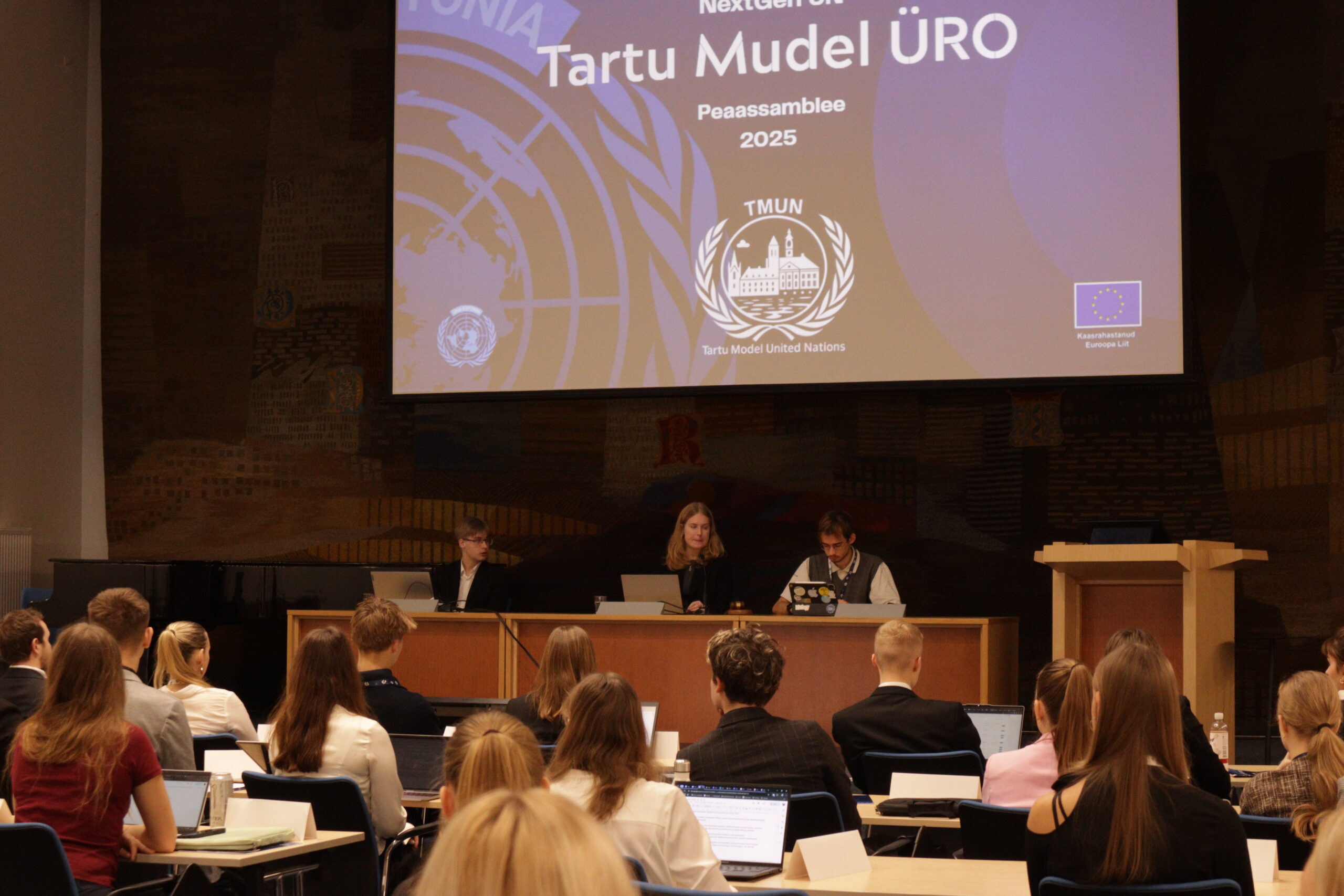
Four days of work culminated at the University of Tartu Library’s conference centre. Delegates gathered for a joint General Assembly plenary session, where committee proposals and diplomatic compromises became part of a broader decision-making process.
The simulation concluded with a closing ceremony. Participants had practised public speaking, negotiation, resolution drafting and finding international compromises.
The people behind the simulation
Miriam Kalja
Secretary-General
Getter Veber
Deputy Secretary-General
Bogdan Janakov
Project Manager
Committee chairs
Aaron-Hans Remi, Marek Gubar, Aleks Jürisson, Barbara Victoria Kuusk, Tuule Pihol, Helis Luks, Laura Mölter, Rando Jaaksoo, Alexander Reinola, Lota Bachfeldt, Karin-Annika Luga and Rieke Langel.
Logistics team
The logistics team, led by Mirko Lainevool and including Lenna Haandi and Mia Nimmerfeldt, handled the conference’s practical arrangements and ensured that everything ran smoothly.
Media team
The media team, led by Karoliina Salu and including Iris Kessler, Maribel Mae and Liisbet Liister, was responsible for documenting and reporting on TMUN.
The first chapter in the TMUN story
Participants came to Tartu from countries including Kazakhstan, France, Vietnam, Czechia and Germany. Over four days, they learned to represent a country, seek compromises and work with people they had never met before.